
The Best Focaccia
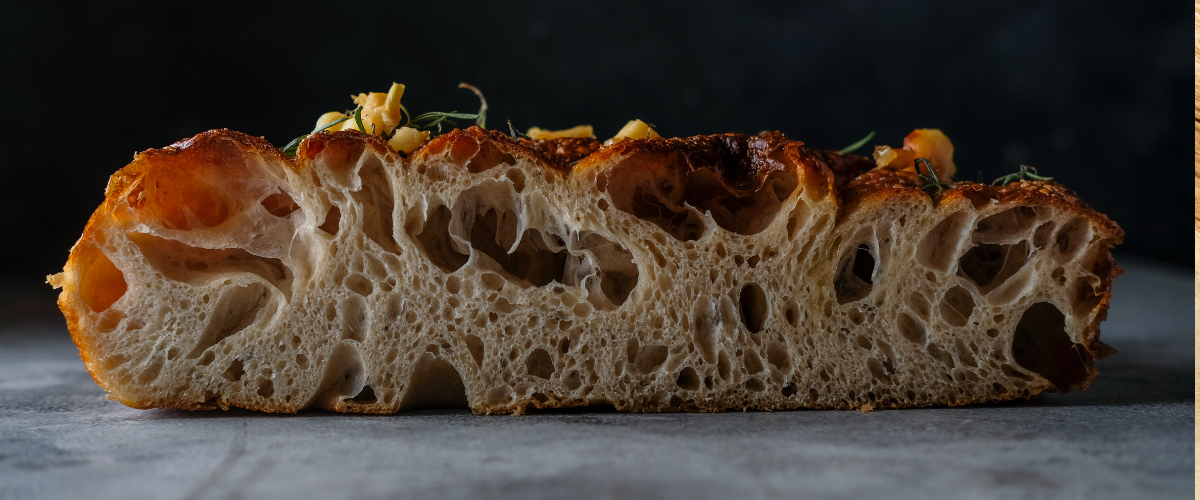
Friends regularly request I make this for them.
by Erin Henderson
A few years ago, I took a pizza and dough-making course, led by the magnificently talented Ema Costantini. Focaccia was naturally part of the curriculum.
I’m not a baker at heart. I struggle with exact measurements, and I am forever exasperated when recipes come with instructions such as “knead to incorporate, but do not over-knead.”
You may also like: Cacio e Pepe Cheese Straws
Luckily for me, focaccia is a forgiving recipe that, really, seems to be able to withstand under- or over-kneading.
Cherry picking between what I considered the best (or easiest) parts of Ema’s recipes, along with tips from cookbook author Alexandra Stafford, and someone who goes by the name @_lacebakes_ on Instagram, “my” recipe is the result of that culinary Venn diagram.
If you attempt this to only so-so results, don’t get discouraged. Focaccia is a very well-hydrated dough, and as such can be a bit of a beast to wrestle into submission. Keep trying, takes notes, and enjoy the journey.
You may also like: Perfect Pasta Dough
Focaccia
I used to buy focaccia, either purchasing from a fantastic Italian shop near my house, for a staggering $9 per quater sheet or from a grocery store where the bread was dry and tasteless. Learning how to make focaccia is one of the best things that ever happened to me. Seriously.
Makes: 9x13 baking tray
Chef level: Moderate
Special equipment: digital scale
Ingredients:
- 8g Instant yeast
- 1tsp Honey
- 2c Lukewarm water
- 2tsp Kosher salt
- 4c/500g Bread flour
- 1c Extra Virgin Olive Oil, divided
- Optional toppings: olives, rosemary, caramelized onions, parmesan, Calabrian peppers, bomba, potatoes,
How to Make It:
- Yeast can be finicky – mix with water that’s too hot and they die off, too cold and nothing happens. To get a good temperature, mix ¾ hot tap water with ¼ cold and you should get a tepid temperature that pleases the yeast.
- In a large bowl, add instant yeast, honey, and the lukewarm water.
- Give it 10 minutes, you should see frothing. If not, your yeast is dead or on the way out, so go get new yeast and start again.
- Add in the salt and 1 Tbsp of oil to the yeast mixture.
- Add in the flour, a little at a time, and work it into the water. You will have a gloppy mess that sticks to your hands, and, unbelievably, this is what you want.
- Leave the shaggy blob in the bowl on the counter, cover with a clean kitchen towel, and set aside for 10 mins.
- With wet hands, so the dough doesn’t stick, grab one side of the dough and pull it up and over the rest of the dough (so taking the left side and folding it over the right side.) Turn the bowl a ¼ turn and repeat this stretch and pull over until you completed all four sides.
- Cover with the towel and it leave to rest on the counter for 30 minutes. You will repeat the stretch and pull 4 times, leaving the dough to rest 30 minutes between each set, for a total of two hours.
- When your final stretch and pull is complete pour another 1 Tbsp oil over the dough, gently smooth the oil across the surface, cover the bowl with plastic wrap and place in the fridge to rest overnight, or up to 24 hours.
- The next day, your dough should have risen impressively – likely it will be pushing itself against plastic wrap in a mighty mushroom. You will be so pleased with yourself.
- Oil a 9 x 13 casserole/lasagna pan and place a sheet of parchment paper on it (the oil will help the paper from sliding around.) Pour another 1 Tbsp of olive oil on the parchment paper. (This will help the bottom crisp up while baking.)
- Take your dough out of the fridge, remove the plastic wrap, and gently pour it onto the parchment paper. Fold the dough in three pieces, like a burrito, and allow it to rest, covered with a clean kitchen towel, for 2-3 hours on the counter (the hotter your kitchen the less time your will need.)
- When you come back the dough should have risen again and spread to nearly the corners of the baking tray. If it hasn’t, simply wet your hands and gently pull it into the corners the best you can. Don’t sweat it if it doesn’t fully reach the corners.
- Now using your fingertips, gently dimple the dough. This is the most satisfying part of making focaccia.
- Pour even more olive oil over the top, sprinkle with Maldon or sea salt, and any garnish you like. I usually use olive and rosemary, but sometimes I use caramelized onions and thyme. Sundried tomato and garlic confit is also good. Use your imagination. Just make sure toppings are well oiled so they don’t burn while baking.
- Place your baking tray in a 425°F oven and bake, turning the tray once to ensure even baking, for about 30 minutes, until golden and the outside is crisp and inside soft and chewy.
Wine Pairing:
Brut bubbly, whether that be Prosecco or a French sparkling wine is always a fantastic choice, but if you are craving something that’s a little more niche, try a Limoncello Basil Spritz in summer, or a Kir Royale in winter.