
Pasta al Limone
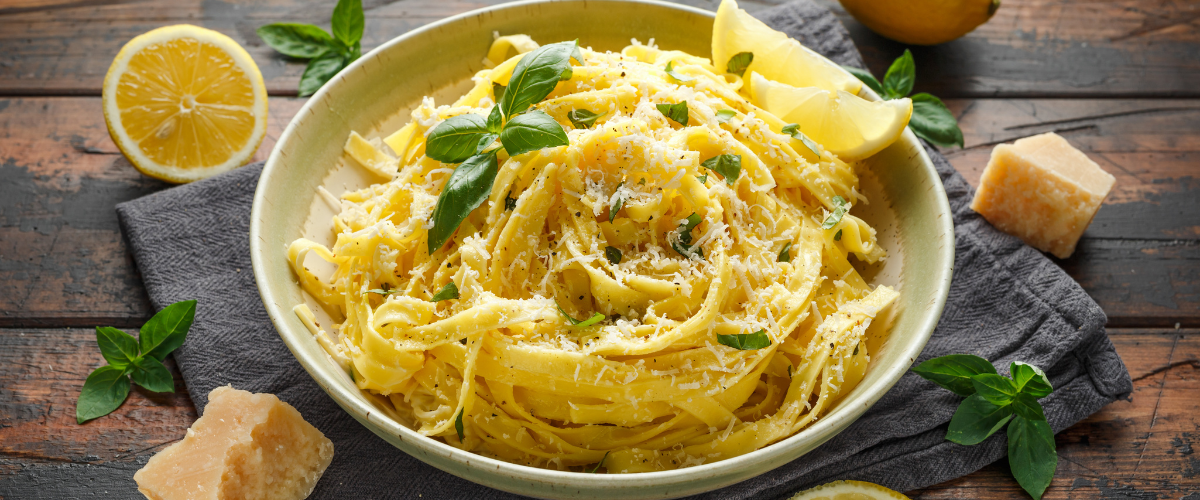
Simple and stylish.
by Erin Henderson
This recipe is adapted from the venerable Ruthie Rogers and her cookbook, River Café London.
I really like it because it’s one of the few recipes for pasta al limone that avoids cream; I have nothing against dairy – clearly – but it can be tricky to blend lemon juice with milk and not have it curdle. Also, leaving the cream out keeps the pasta a bit lighter, which is nice for warm weather eating.
You may also like: Easy Lemon Pesto
Most pasta al limone recipes are based on the enormous and lusciously sweet lemons of the Amalfi. Sfusato Amalfitano as they’re known, came to be by crossing local lemons with oranges. That was a long time ago but now these gigantic, knobbly orbs are practically the mascot of Italy’s most glamorous coast line.
The lemons we have in Ontario, in my mind, are a bit too sharp for this sauce. However, Amalfi lemons are impossible to source here, so I recommend using the sweeter Meyer lemon if you can find it, which my bet is you won’t outside of the new year. So instead, consider using ¼ of freshly squeezed orange juice to balance out the piercing lemony bite.
Your next read: Spring Pea and Lemon Risotto
Pasta al Limone
You know one of my cardinal rules for hosting is to have everything done ahead of time, which alas, this dinner does not loan itself.
However, pasta al limone is a great option for a cottage getaway, when everyone is barefoot and in bathing suits, sand sticking to shoulders, and wet hair still in a tangle.
Throw on some great music, pour the cocktails and enjoy the kitchen party. Let someone whip up a salad, someone else can set the table, and you can focus on getting this pasta on the table – and in bellies – in less than 20 minutes.
Serves: Potentially 4
Chef level: moderate
Ingredients:
- ½ lb pasta (spaghetti, tagliatelle, or linguine)
- 1 lemon, preferably organic and well washed, as you will use the rind as well
- ¼ orange, optional
- 3-4 Tbsp extra virgin olive oil
- 6 oz finely grated Parmesan
- A few twists of fresh black pepper, to taste
- ½ cup fresh dill or basil, your choice
- Pinch of red chilli pepper flakes
How to Make It:
- Set up a large pot of water to boil, when ready, generously salt and add pasta.
- While pasta cooks, grate cheese in a large bowl. (I find a rasp is best for this; the feathery flakes will melt better into the oil and water to create a creamy sauce.)
- Zest the entire lemon and mix into the cheese.
- Squeeze in half the lemon juice, and optional orange juice, the oil, and black and chili pepper.
- With a whisk, stir vigorously to combine. The cheese should already be dissolving into the sauce, though it will still have texture.
- Snip the dill or chiffonade the basil into thin strips and set aside.
- Scoop out a cup of pasta water from the boiling pot and reserve.
- Add the pasta water, one tablespoon at a time, to the cheese mixture, stirring heartily to combine into a smooth sauce. Keep adding splashes of water until the sauce is smooth and creamy.
- Drain the cooked pasta, reserving more pasta water in case you need it, and toss with the cheese mixture.
- Add the fresh herbs, toss to combine, thinning out with water if needed, and serve immediately.
Wine Pairing
Acids nullify acids.
What this means is a highly acidic food will sweeten a highly acidic wine. Don’t believe me? Take a glass of Sauvignon Blanc and a slice of lemon (this exercise may bring memories back from your university days.) Take a sip of the wine, swish it around and notice how much your mouth waters. Swallow. Now suck on the lemon, get a good, tart mouthful. Go back to the wine and take another sip. I guarantee your wine will now taste sweet.
Because of this little phenomenon, we want to pair a wine to the lemony pasta that has acid to spare. We also want to consider the fresh herbs that are vying for a co-starring role of flavour.
Now, before we run around dousing everything in Sauvignon Blanc (which is a fine choice, though not necessarily an original one), let’s do a deeper dive into other wines that might check the boxes, as well.
Consider light to medium bodied wines, that have that taut acidity and some herbal flavours: Verdicchio from the Marche in Italy, Assyrtiko from Grrece, and even Chablis from France all would work well with this pasta.
If you’re a diehard red lover, while not my first choice, you might get away with bright wines with low tannin such as Gamay from Ontario or basic Chianti from Italy.