
Perfect Pairing: Why Cabernet Sauvignon and Steak Belong Together
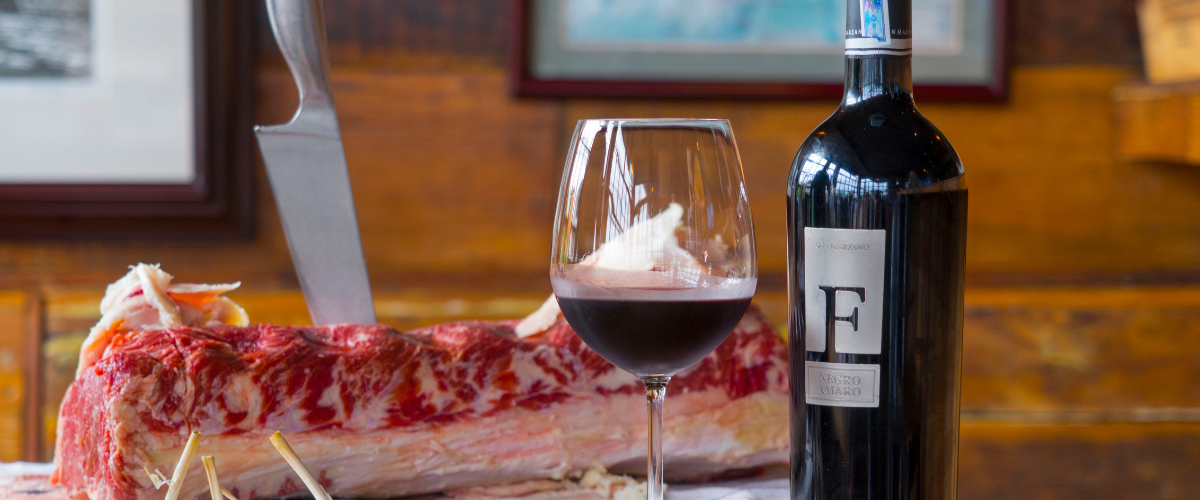
It's all chemistry.
by Erin Henderson
Cabernet Sauvignon and steak have long been happy bedfellows. But why has this pairing stood the test of time? What makes this marriage of food and wine work so perfectly?
Cabernet is a grape with strong tannins (and, if it's aged in oak barrels as most are, tannin can be absorbed from the wood, as well.) In the extreme, tannin makes your mouth feel like it's stuffed with cotton balls. But these sticky, fuzzy, astringent tannins have a bit of a thing for fat and protein – especially the kind found in meats like beef.
When tannin meets protein, they bind together in a passionate embrace, a sexy tango, a desperate clinging ... ok, you get it.
Take a sip of that bold Cabernet Sauvignon on its own, and you might find the fierce tannin a little distracting, even palate-fatiguing. But follow up that sip with a bite of grilled ribeye, and the meat's fat and protein smooth out the wine's edge. Essentially the protein binds to the tannin, while the fat washes it away.
You may also like: What's the Difference Between Tannin and Acid
However, you'll notice that not all Cabernet Sauvignon has firm, bold tannin. Some Cabs, especially those that haven't spent much time in oak barrels or have aged for a number of years, have a softer profile.
You'll also notice that cuts of beef vary in terms of fat content. Filet mignon is very lean, while a ribeye has a lot of marbelling.
Sauces, seasonings, and cooking methods aside, your best bet is to pair a high-tannin Cabernet Sauvignon with bolder cuts of beef, like prime rib, and softer, or older, Cabernet with leaner cuts, like flank steak.
Your next read: How to Make Classic Steak Tartare